A tool to guide non-physicians through a medical decision
The Clinical Outcome Metrics for Optimization of Robust Training (COMfORT) tool was developed by researchers at NASA to provide support to non-physicians when faced with medical situations. For example, the tool includes diagnostic and treatment support, as well as support to complete procedures like an ultrasound.
The tool was tested with both physicians and non-physicians. Participants were guided through using the tool with a sample patient, then used the tool to diagnose and treat new patients on their own. All participant actions were recorded in the tool.
Comparison between physicians and non-physicians in diagnostic task
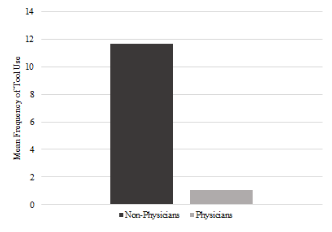
We analyzed the data comparing physicians to non-physicians in their behaviors while using the tool. We found that non-physicians relied on the tool more often than physicians, as seen in the graph below.
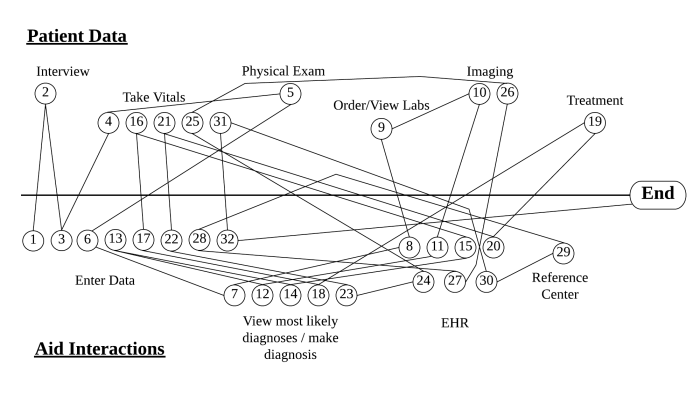
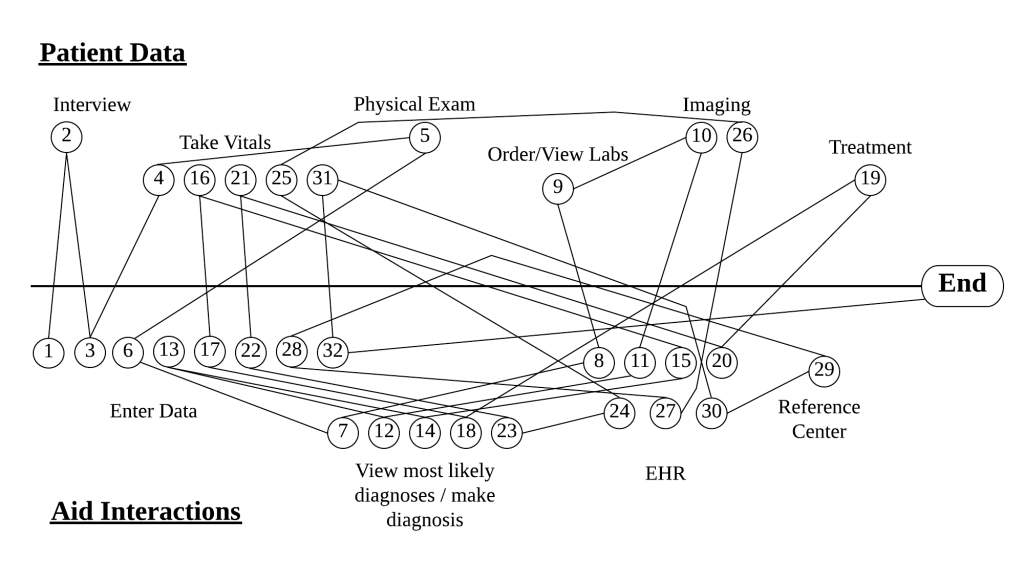
In particular, we focused on the pathways that each group took to diagnose and treat the patients. We did this by categorizing participant actions, then creating diagrams to illustrate how the participants moved through each of those categories. A sample of one of these diagrams is shown below.
How these results can improve the tool
The purpose of this project was to determine how physicians and non-physicians differ in their use of this tool, and how the tool can better support both groups. In particular, we found behavioral differences in the use of the tool that showed physicians relying on their own knowledge while non-physicians relied on the tool’s suggestions. Future versions of the tool can use this information to provide the proper information and support to non-physicians at the proper times.

 Mak Pryor