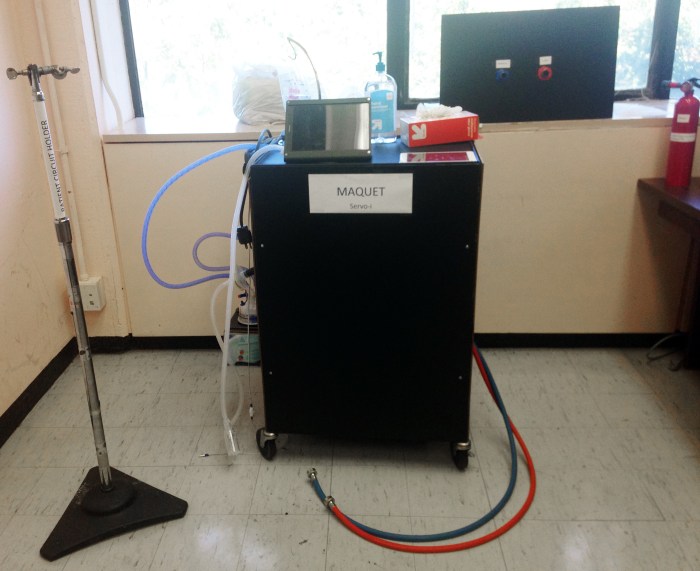
The overall goal for this project was to develop guidelines for creating cognitive aids. The final version of our aid will assist astronauts when completing unfamiliar and complicated procedures. To simulate this condition — highly educated and motivated users attempting to complete a task with which they have little to know experience — we decided to assess our aid by asking veterinary students to complete a medical task. Below are details of each stage of the study so far.
Understanding the Task
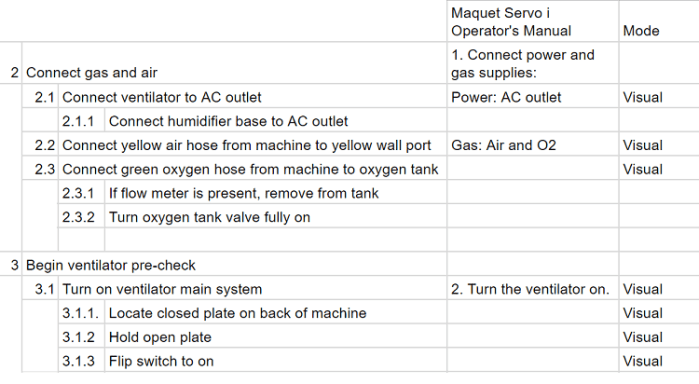
After interviewing experts, we chose a medical ventilator setup procedure as our task for this study. We conducted a contextual inquiry with an expert to see how to complete the task. Using this information and information from online resources (including video tutorials for the ventilator), we created a hierarchical task analysis (pictured above).
The task analysis broke down the procedure to many component steps. This allowed us to assess the procedure in detail, and to design the aid based around the needs of people completing the procedure. For example, it may be useful to include a picture on a step with a lot of visual information.
We also used the task analysis to create the written instructions participants must follow to complete the procedure.
Building a Simulation and an Aid
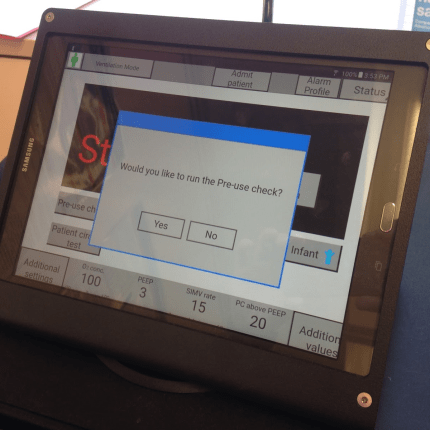
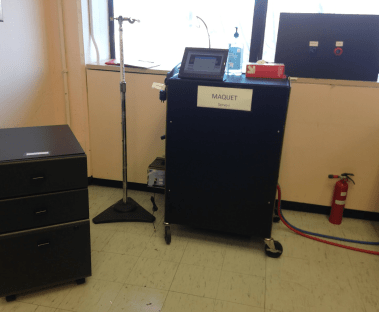 The next step in our project was building the physical (right) and software (below) simulations of the ventilator. We used the task analysis and contextual inquiry to create accurate simulations of the ventilator, as well as to modify our simulations to best fit our study needs.
We conducted pilot testing with lab members to ensure that the simulation worked and the procedure could be completed. We then asked an expert validate our simulation. The expert was successfully able to complete the procedure using our simulation.
We also constructed a prototype of our proposed cognitive aid. The aid underwent a large amount of testing and evaluation by lab members before it was ready to be used by participants.
Testing the Aid with the Simulation
In the experiment, participants use the aid, which includes a step-by-step procedure as well as additional tools such as notes and pictures, to prepare the ventilator for use with a patient. Participants wear eye tracking glasses, complete surveys and assessments, and experimenters record participant responses for each step of the procedure.
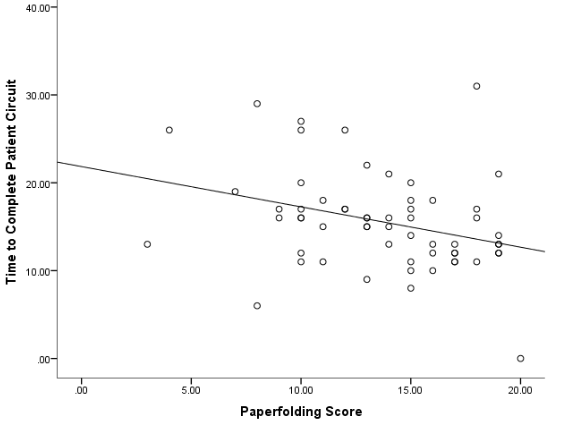
My focus on the project was to examine if individual differences as measured by ability tests were related to performance on the task. Results showed that individual differences on a spatial ability measure, a paperfolding task, were negatively correlated to the time participants required to complete the spatial section of the task.
These results can help further develop the aid by taking individual differences into account when providing support to users.
This material is based upon work supported by NASA under grant or cooperative agreement award. Any opinions, findings, and conclusions or recommendations expressed in this material are those of the author(s) and do not necessarily reflect the views of the National Aeronautics and Space Administration (NASA).

 Mak Pryor